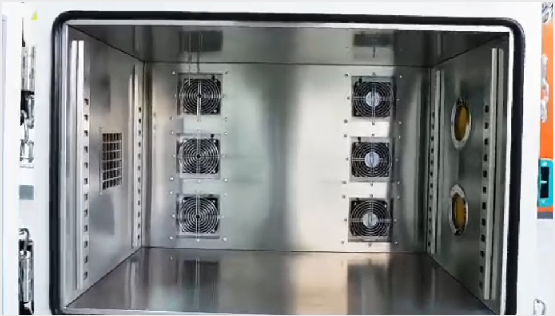
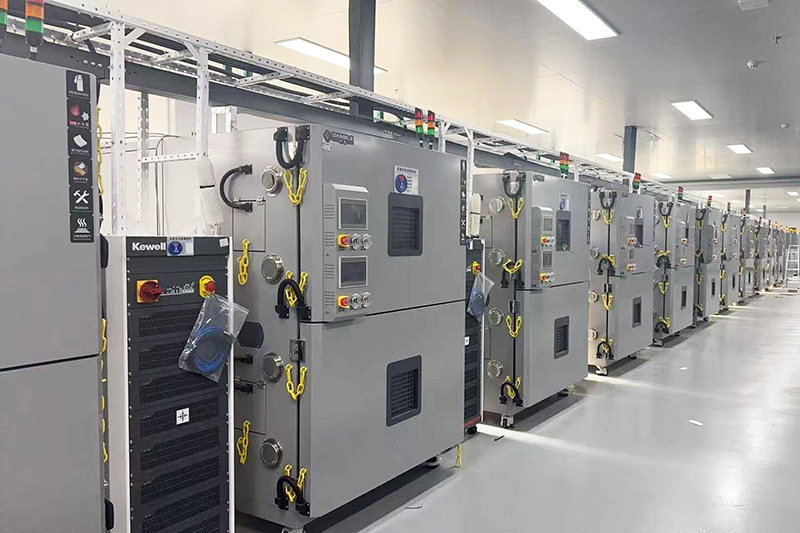
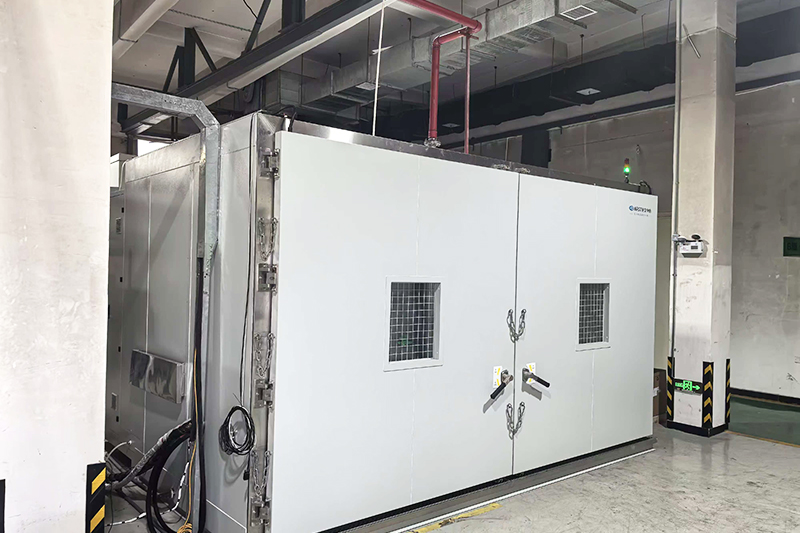
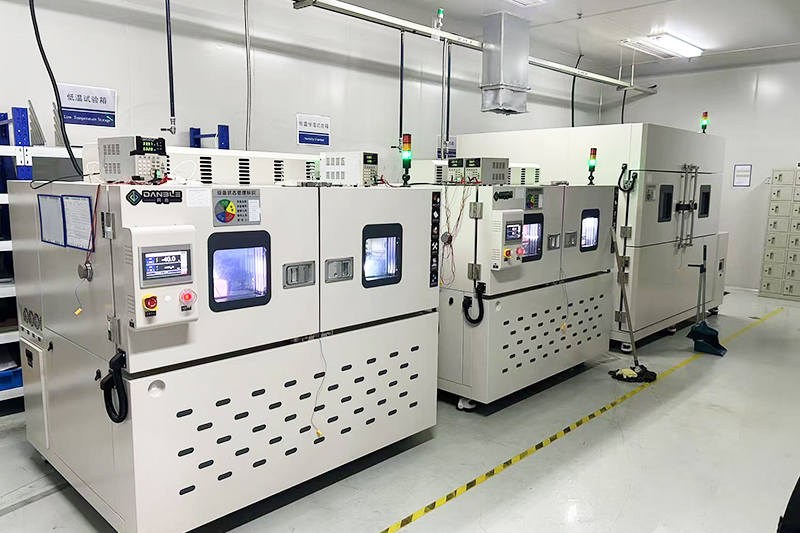
Standard battery test chambers often create R&D bottlenecks through sequential testing and shared systems prone to cross-contamination. Danble Instrument addresses these limitations with a bespoke three-layer independent battery test chamber, engineered for high-throughput validation. The core innovation lies in three fully isolated 540L cavities, each functioning as a self-contained ecosystem with dedicated refrigeration and control systems. This architecture supports simultaneous execution of disparate test profiles—from -40°C pulse tests to +120°C aging cycles—without thermal interference. Designed for a 120kg load per cavity, the system guarantees temperature uniformity (≤1.5°C) and stability (±0.5°C) under real-world conditions, aided by CFD-optimized airflow and dynamic PID control. Industrial-grade durability is ensured via full PTFE interior coating, resisting hydrofluoric acid corrosion from electrolyte leakage, and redundant water-cooled systems managing up to 1kW internal he
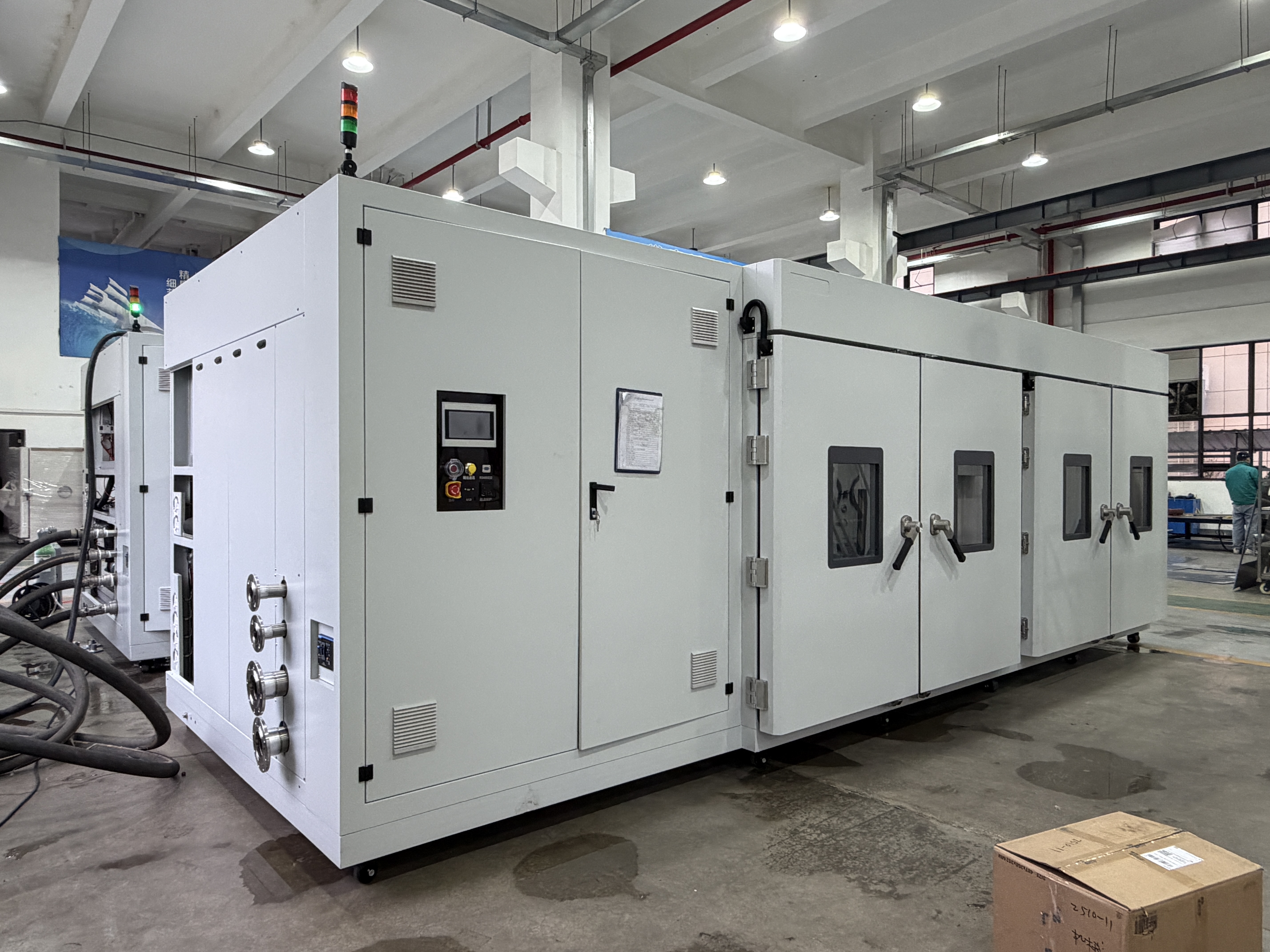
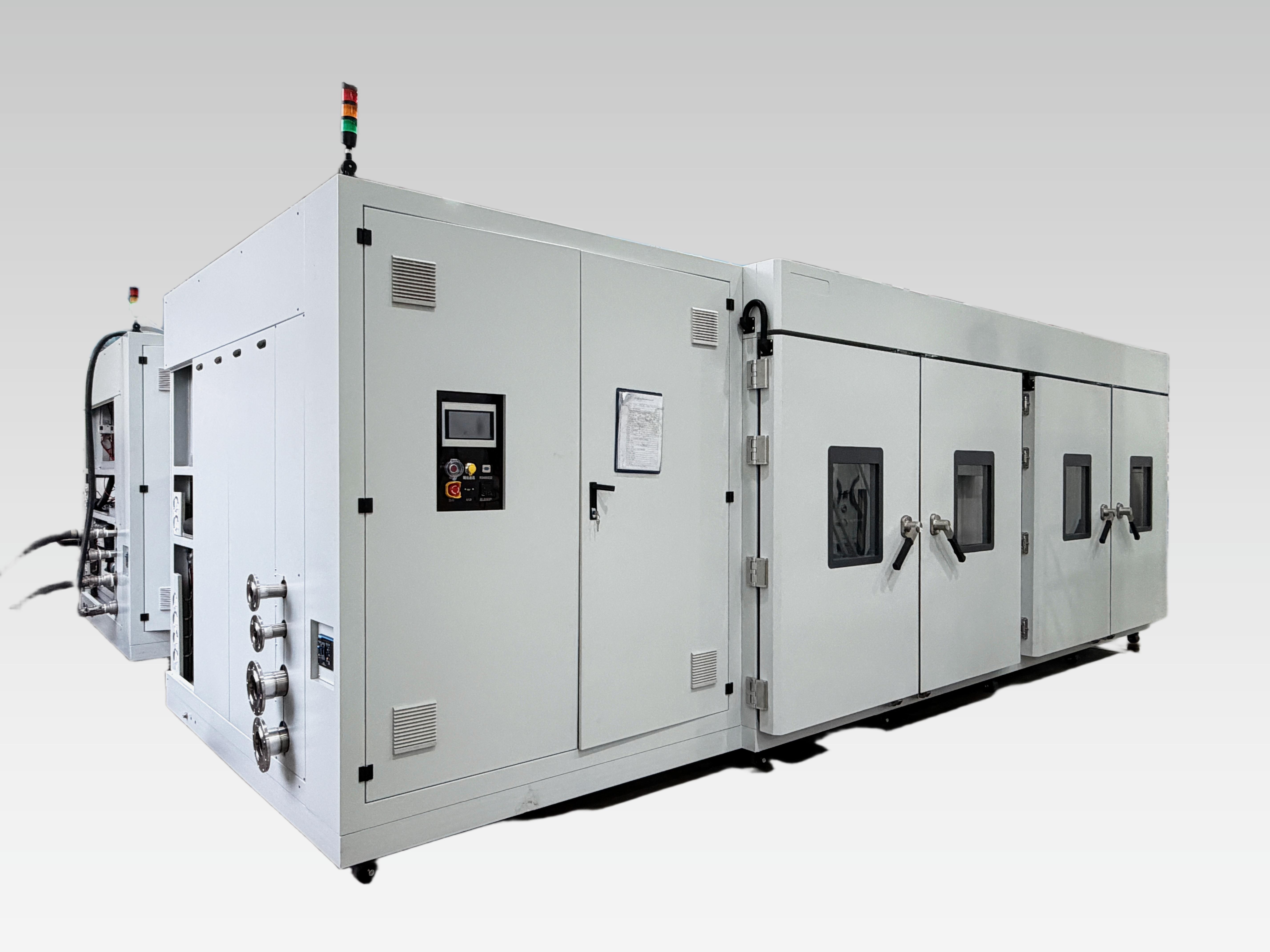
As full-scale e-drive assemblies (EDUs) become standard test subjects in EV R&D, conventional sub-300L thermal shock chambers prove incompatible: cutting prototypes to fit invalidates structural integrity data, making customized large-format solutions a necessity rather than a premium option. Danble Instrument addresses this gap with a bespoke 1800L left-right two-zone thermal shock chamber, engineered to retain the precision of bench-top units at six times the volume. Core design strategies include front-loaded 3D thermal-fluid simulation to optimize airflow and temperature uniformity without post-production tuning, dynamic refrigeration capacity control that anticipates thermal loads to achieve <5-minute recovery without oversized hardware, and a robust nested partition structure that leverages precise alignment between the fixed wall aperture and moving basket to ensure airtightness without complex moving gates. The build demonstrates that large-volume environmental testin
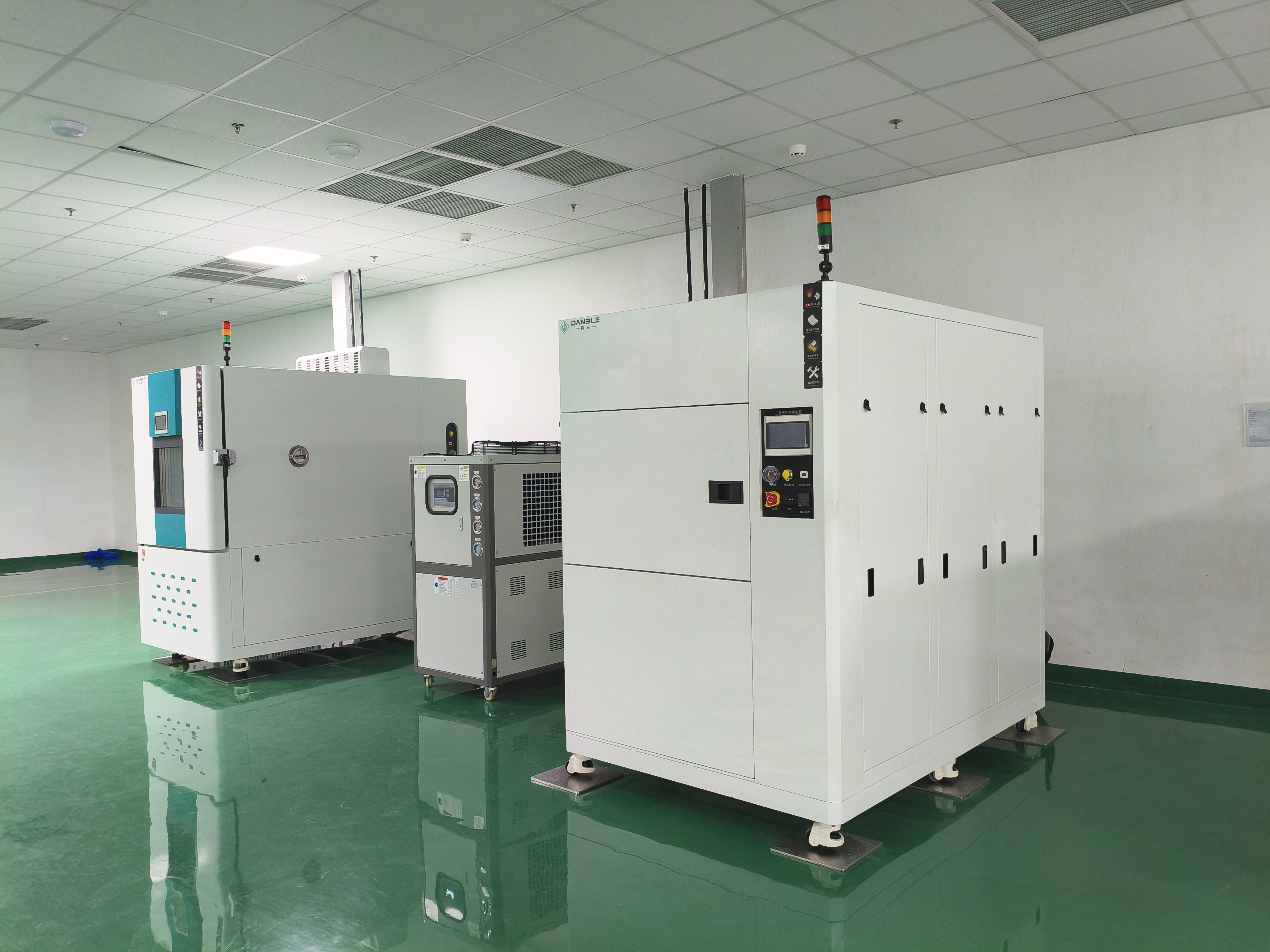
Thermal shock chambers are essential industrial environmental testing devices for accelerated thermal stress screening and product reliability verification. This comprehensive guide elaborates on the definition, working principles, core components, and mainstream global industry testing standards of thermal shock chambers. It also highlights the technical strengths of Danble Instrument’s high-performance thermal shock testing equipment, helping industrial manufacturers conduct precise, standard-compliant thermal shock tests for new energy batteries, automotive parts, and precision electronic components.
Electric vehicle architectures are rapidly transitioning to higher voltage platforms, often exceeding 800V. As system voltages climb, the risks associated with high-altitude operation increase exponentially. At low atmospheric pressures, vehicles face an elevated threat of dielectric breakdown, cool
Standard battery testing equipment often fails to meet the customized and high-standard testing demands of diversified battery products and complex application scenarios, leading to inconsistent product quality and non-compliance risks. This article explains how customized battery test chambers solve the limitations of universal testing equipment, achieve targeted quality inspection and reliability verification, and fully meet global industry certification standards. It also introduces Danble Instrument’s tailored battery testing solutions to help brands stabilize product quality and pass compliance audits efficiently.
Product reliability and launch efficiency are critical competitiveness for new energy, automotive and electronic enterprises. Traditional long-cycle aging testing delays product iteration and market launch, while undetected potential defects lead to high post-market failure rates. This article elaborates on how thermal shock chambers simulate extreme rapid temperature changes to conduct high-efficiency stress screening, accelerate product verification cycles, and eliminate latent failures in advance. It also highlights Danble Instrument’s professional thermal shock testing solutions to help enterprises shorten R&D cycles and improve product market stability.
Battery test accuracy directly determines the validity of new energy battery R&D, quality inspection, and certification results. Minor environmental fluctuations often cause inconsistent test data, misleading performance evaluation and safety judgment. This article explains how professional environmental simulation chambers stabilize test conditions, eliminate external interference, and deliver repeatable, high-accuracy battery test results. It also highlights Danble Instrument’s core technical advantages in precision control and standardized battery testing solutions.
Environmental test chambers are core industrial reliability testing equipment designed to simulate real-world climatic stresses including temperature, humidity, and low-pressure altitude environments. This blog explains the basic structure, core functionality, working principles, and mainstream global industry standards of environmental test chambers. It also introduces professional customized environmental test solutions from Danble Instruments, helping manufacturers select compliant, stable, and high-performance testing equipment for automotive, new energy, aerospace, and electronic product validation.
This article presents Danble Instruments' custom low pressure test chamber solutions designed specifically for automotive-grade laboratories. It covers core technical specifications, automotive-exclusive configurations, comprehensive safety systems and full-process service support. Our chambers feature imported compressors and Siemens PLC control systems, enabling accurate simulation of high altitude environments with combined temperature and pressure cycling. With over 15 years of industry experience, Danpo provides customized solutions from 50L benchtop units to 10,000L walk-in facilities for automotive, new energy and aerospace industries.
In today’s rapidly evolving electronics industry, ensuring that products can withstand extreme environmental conditions is no longer optional—it’s a necessity. With devices being used in more diverse and demanding environments, from automotive to aerospace, manufacturers must guarantee their products remain functional and reliable over time.
Environmental chamber test standards are the foundation of reliable product performance validation across industries. This article explores core global standards—including IEC 60068, MIL-STD-810, and ASTM B117—outlining their applications in temperature, humidity, and corrosion testing. It also highlights how adherence to these standards ensures consistent, repeatable results, regulatory compliance, and accelerated product development. With expertise in precision environmental testing, Danbo Instrument supports industries in aligning with international benchmarks for quality and reliability.
Environmental Stress Screening (ESS) is a standardized environmental reliability screening method widely adopted in modern manufacturing. It applies controlled temperature, humidity and vibration stress to finished products, aiming to trigger and screen out latent production defects that cannot be detected by conventional functional tests.
In today’s highly competitive manufacturing landscape, product reliability is crucial for businesses seeking to maintain their reputation and gain a competitive edge. One of the most effective ways to ensure a product can withstand the stresses of extreme environmental conditions is through the use of Three-Zone Thermal Shock Chambers. These chambers are specially designed to simulate the rapid temperature changes that products might experience during their lifecycle, ultimately providing valuable insights into their durability and performance.
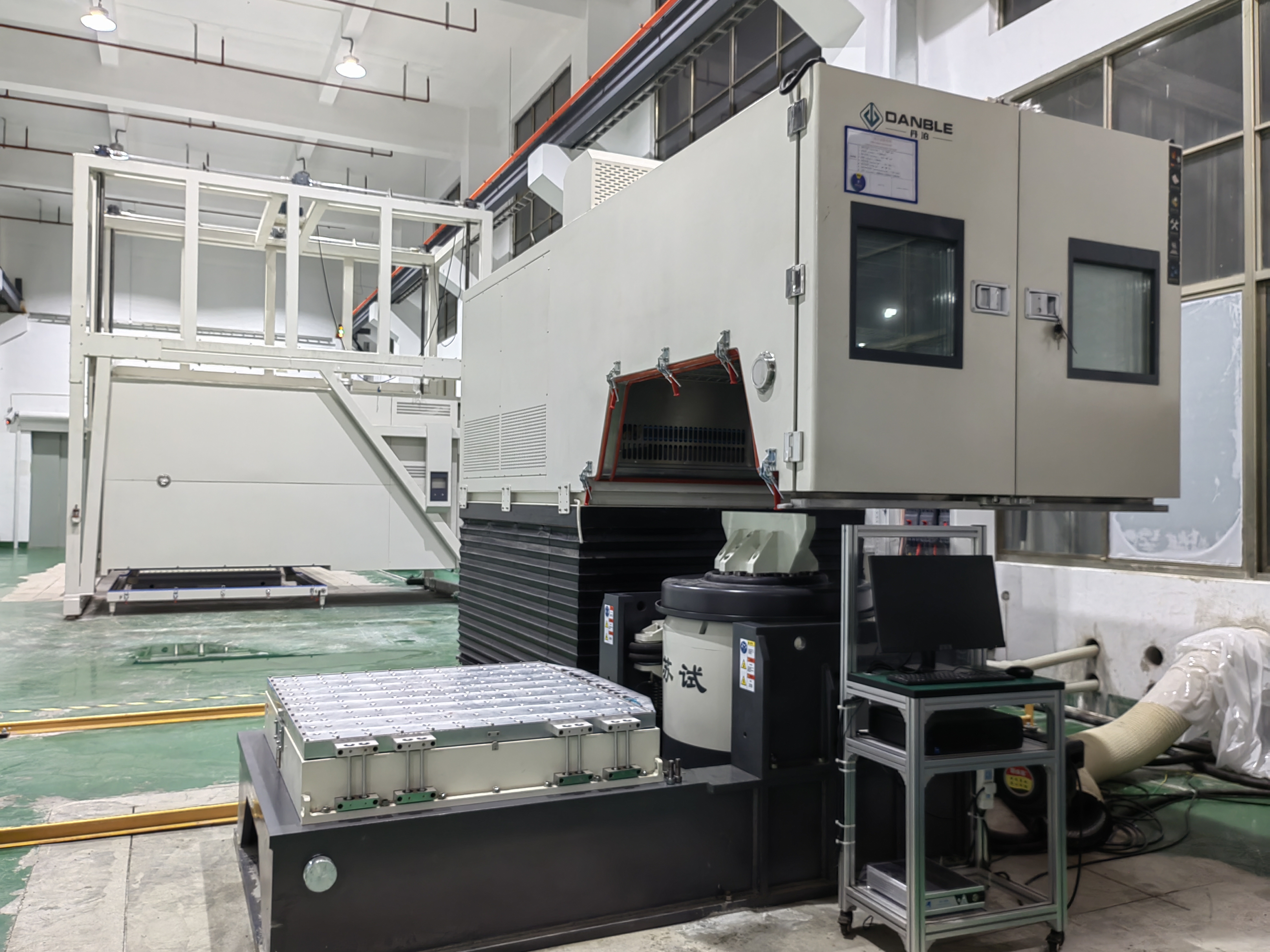
Applications of Temperature/Humidity/Vibration Chambers in Automotive Component Validation Introduction In the automotive industry, testing vehicle components under extreme conditions is crucial for ensuring safety and reliability.
Introduction In the quest to ensure product reliability, THV Combined Chambers play an indispensable role. By replicating real-world conditions such as temperature, humidity, and vibration, they help manufacturers test products for durability.
Introduction In today’s competitive product development landscape, ensuring durability under extreme conditions is critical. Temperature, Humidity, and Vibration Chambers offer an integrated testing solution across industries like automotive, aerospace, and electronics.