Introduction
In the quest to ensure product reliability, THV Combined Chambers play an indispensable role. By replicating real-world conditions such as temperature, humidity, and vibration, they help manufacturers test products for durability.
In this article, we will explore how these chambers support product lifecycle quality control. You’ll learn about the challenges they solve, and how they ensure a product performs well from development to post-market.
Understanding the Role of THV Combined Chambers in Quality Control
What Are THV Combined Chambers?
THV Combined Chambers are sophisticated testing systems that integrate three critical environmental factors—temperature, humidity, and vibration—into a single testing chamber. These chambers are designed to simulate real-world conditions that products may encounter during their lifecycle, including transportation, storage, and actual use. By replicating these conditions, manufacturers can identify potential vulnerabilities in products and take corrective actions before they are released to the market.
The primary function of THV Combined Chambers is to test the resilience and reliability of products. These systems combine environmental testing in a single, controlled setting, providing a comprehensive analysis of how products will perform under various stresses.
How THV Combined Chambers Support Quality Control Across Product Lifecycles
Throughout a product's lifecycle, from research and development (R&D) to production, THV Combined Chambers play a key role in testing. During R&D, they simulate extreme conditions to ensure products meet the necessary standards for durability and performance. In production, these chambers help to verify that each unit manufactured can withstand these stresses.
For instance, in aerospace and automotive industries, where reliability is critical, these chambers simulate temperature changes, humidity variations, and mechanical vibrations to test the endurance of components. For medical devices, the chambers test product safety under extreme conditions to ensure patient safety.
Key Benefits of Using THV Combined Chambers in Quality Control
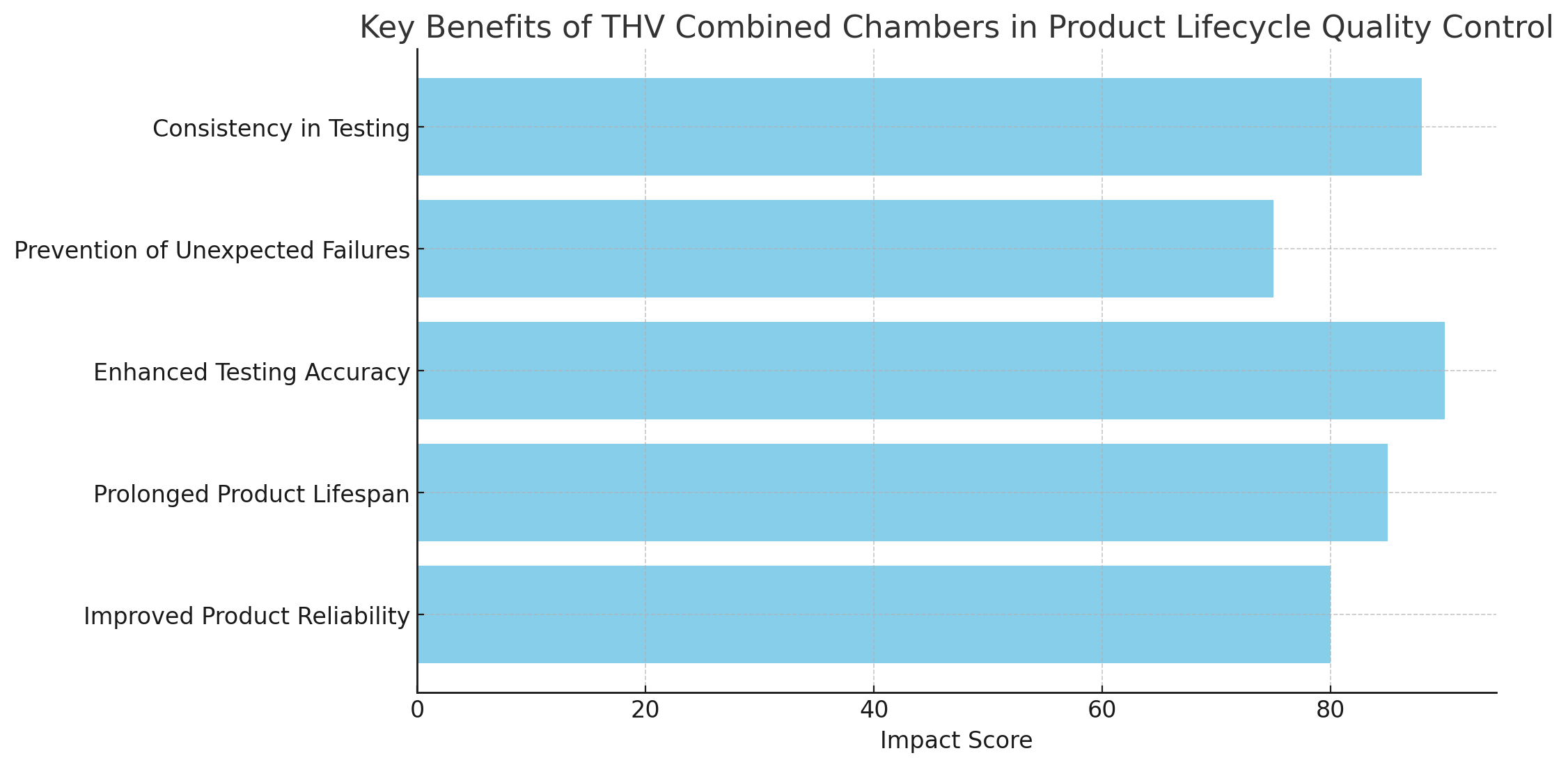
Using THV Combined Chambers in quality control offers multiple benefits:
● Improved product reliability: Testing under varied environmental conditions helps to identify potential weaknesses early, ensuring that the final product is durable and performs consistently.
● Prolonged product lifespan: Regular stress testing extends the life of products by uncovering design flaws or material weaknesses before they cause problems in real-world applications.
● Enhanced testing accuracy: These chambers provide precise control over environmental factors, enabling manufacturers to test with high accuracy and consistency.
Key Benefit | Description |
Improved Product Reliability | Ensures products meet rigorous quality standards by testing under real-world environmental conditions. |
Prolonged Product Lifespan | Identifies weaknesses early, leading to product improvements and extended use. |
Enhanced Testing Accuracy | Provides precise control over environmental factors like temperature, humidity, and vibration. |
Prevention of Unexpected Failures | Conducts comprehensive stress testing to prevent failures during real-world usage. |
Consistency in Testing | Delivers repeatable and reliable results that maintain quality across production batches. |
Key Testing Procedures in THV Combined Chambers
Standard Testing Methods for THV Combined Chambers
THV Combined Chambers utilize various testing methods, including temperature, humidity, and vibration testing. The AGREE (Advisory Group on Reliability of Electronic Equipment) testing method is commonly used, as it integrates these three factors in a single test cycle. This combined approach allows for more efficient testing while ensuring that the product is subjected to the most realistic conditions possible.
● Temperature Testing: This simulates temperature extremes that a product might experience in real-world conditions, ranging from freezing temperatures to extreme heat.
● Humidity Testing: Replicates the moisture levels that products may face in environments with high humidity or fluctuating moisture.
● Vibration Testing: Simulates the mechanical stresses and vibrations products experience during transport or operation.
Performance Metrics and Quality Control
Key performance indicators (KPIs) are used to assess the reliability of a product during testing. In THV Combined Chambers, these include:
● Pressure tolerance: The ability of a product to withstand varying pressure levels without failure.
● Seal integrity: Ensures that seals within the product maintain their functionality, even under extreme conditions.
● Thermal resistance: Tests how well a product can resist heat or cold, ensuring it remains functional across temperature extremes.
These metrics guide manufacturers to improve their products, ensure compliance with industry standards, and guarantee high performance throughout the product lifecycle.
Innovations in Testing Technology
Advancements in testing technology are continuously improving the capabilities of THV Combined Chambers. The integration of Artificial Intelligence (AI) and machine learning has allowed for better prediction models and real-time adjustments during testing. Additionally, innovations in vibration control and more accurate temperature and humidity regulation have greatly improved testing precision.
Challenges and Solutions in Product Lifecycle Quality Control with THV Combined Chambers
Common Failure Modes in Quality Control
There are several common failure modes that products might experience when subjected to THV Combined Chambers testing, including:
● Mechanical failures: Caused by material fatigue or stress from vibrations.
● Structural failures: Cracking or corrosion due to temperature and humidity fluctuations.
● Operational failures: Design flaws that cause malfunctions under stress.
● Environmental failures: External factors like rapid temperature changes or exposure to humidity.
The THV Combined Chambers identify these issues early by replicating the exact conditions that can lead to product failure, enabling companies to make necessary adjustments before the product reaches the market.
Addressing Product Vulnerabilities Using THV Combined Chambers
Continuous testing with THV Combined Chambers helps manufacturers pinpoint potential product vulnerabilities before they become critical. This proactive testing approach ensures that products can withstand environmental stresses and function properly throughout their lifecycle. Preemptive testing also minimizes the risk of unexpected failures in the field, enhancing product reliability and customer satisfaction.
Solutions Provided by THV Combined Chambers
The THV Combined Chambers offer solutions by providing a controlled environment for testing under real-world conditions. They provide consistency, accuracy, and efficiency throughout the testing process, ensuring that products meet quality standards before they reach consumers.
The Future of Product Lifecycle Quality Control with THV Combined Chambers
Advancements in Environmental Testing for Quality Control
The future of environmental testing looks promising, with advancements in both technology and methodologies. THV Combined Chambers are evolving with better integration of new testing environments, such as extreme cold or high-pressure simulations. These innovations will provide more comprehensive data on how products perform under extreme stress.
Predictive Analytics and Artificial Intelligence in Testing
AI and predictive analytics will revolutionize testing by providing more accurate forecasts of how products will perform over time. These tools can analyze vast amounts of data collected during testing and predict future failures or performance issues, allowing for more precise lifecycle management.
The Role of THV Combined Chambers in Evolving Industries
Industries will continue to benefit from the integration of THV Combined Chambers as new materials and technologies emerge. As product designs become more complex, having reliable environmental testing systems will remain crucial to ensure product quality and longevity.
Conclusion
In conclusion, THV Combined Chambers are essential for product lifecycle quality control. They provide an accurate and efficient testing environment to ensure that products can endure real-world conditions. By using these chambers, businesses can detect weaknesses early, improve durability, and streamline manufacturing. Going forward, these chambers will continue to play a key role in ensuring product performance and longevity across industries. DANBLE offers advanced environmental testing solutions, helping businesses meet the demands of quality control with precision and reliability.
FAQ
Q: What are THV Combined Chambers used for?
A: THV Combined Chambers are used to simulate real-world environmental conditions, including temperature, humidity, and vibration, to test product reliability throughout its lifecycle.
Q: How do THV Combined Chambers support product lifecycle quality control?
A: THV Combined Chambers help ensure consistent product performance by identifying weaknesses during development, improving durability, and streamlining manufacturing.
Q: Why are multi-environmental tests important for quality control?
A: Multi-environmental tests, like those in THV Combined Chambers, replicate real-world stresses and ensure products can withstand harsh conditions during their lifecycle.
Q: What industries benefit from THV Combined Chambers?
A: THV Combined Chambers are vital in industries like aerospace, automotive, and electronics, ensuring products meet rigorous reliability and performance standards.
Q: Can THV Combined Chambers detect product vulnerabilities early?
A: Yes, THV Combined Chambers provide controlled testing environments that help identify vulnerabilities early, preventing failures in real-world conditions.