Low air pressure environments destroy electronics. When you ship components via air freight or deploy them at high altitudes, the atmospheric pressure drops. This pressure differential causes immediate engineering failures. Dielectric breakdown is the most common issue. As air thins, it loses its insulating properties. High-voltage traces arc, frying sensitive circuit boards instantly. Mechanical seals rupture under the internal pressure, letting moisture in later. Active devices lose convective cooling. Without dense air to carry heat away, components overheat and fail in minutes.
You cannot guess if your product will survive. You need an IEC 60068-2-13 Low Pressure Test Chamber to simulate these conditions accurately. This equipment provides repeatable evacuation rates, specialized thermal management, and rigorous data logging. We use these chambers to validate product reliability before field deployment, ensuring hardware survives the physical realities of high-altitude operation.
Key Takeaways
Standard Scope: IEC 60068-2-13 dictates testing parameters for components stored or operated at high altitudes, requiring chambers to reach specific severity thresholds ranging from 84 kPa down to 1 kPa for durations of 5 minutes to 16 hours.
Chamber Essentials: A compliant IEC 60068-2-13 low pressure test chamber must feature heavy-duty vacuum pumps, reinforced structural integrity, precise automated pressure controllers, and specialized conduction cooling systems (like thermal platens) for active loads.
Evaluation Criteria: Procurement decisions should prioritize evacuation speed, combined temperature/altitude capabilities, leak-rate integrity, and software compliance for audit-ready reporting.
Implementation Reality: Facility readiness—including exhaust routing for pump oil mist, power requirements, floor load capacity, and safety protocols for volatile DUTs (Devices Under Test)—is a primary bottleneck in chamber deployment.
Table of Contents
IEC 60068-2-13: Test Scope & Pass Requirements
IEC 60068-2-13 (Test M: Low Air Pressure) evaluates equipment performance under reduced atmospheric pressure. It helps verify product reliability during high-altitude transportation, storage, and operation, particularly for electronic and aerospace equipment.
1. Test Severity Levels and Applications
Different pressure levels simulate various altitude conditions and operating environments.
Pressure Level | Approx. Altitude | Typical Application |
|---|---|---|
84 kPa | 1,500 m | High-altitude installations |
70 kPa | 3,000 m | Mountain transportation |
55 kPa | 5,000 m | Unpressurized air transport |
25 kPa | 10,000 m | High-altitude aerospace testing |
1 kPa | 30,000 m | Extreme-altitude equipment testing |
Altitude values are approximate. Test severity levels should be selected according to the applicable standard and product specifications.
2. Operating vs. Non-Operating Tests
Low-pressure testing evaluates equipment under different operating conditions. Non-operating tests focus on structural integrity, sealing performance, and leakage during storage or transportation. Operating tests additionally assess electrical stability and thermal performance when reduced air density limits convective cooling.
3. Key Pass Requirements
Test acceptance criteria depend on the product specification and selected test conditions. Common evaluation factors include:
Electrical Safety: No unacceptable arcing or insulation breakdown.
Structural Integrity: No significant deformation or seal failure.
Leak Prevention: No unacceptable fluid or electrolyte leakage.
Thermal Stability: Safe operating temperatures during active testing.
Functional Performance: Equipment meets specified operating requirements.
4. Test Results and Compliance Verification
Successful IEC 60068-2-13 testing requires the Device Under Test (DUT) to meet its defined performance and safety criteria during or after low-pressure exposure. Test records should document pressure levels, exposure duration, operating conditions, and inspection results.
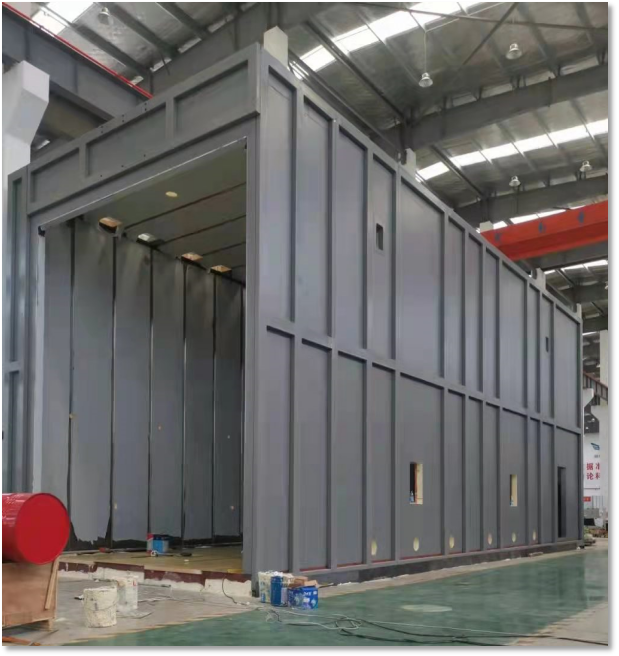
Key Specifications of Low Pressure Test Chambers
Simulating high-altitude environments requires heavy-duty engineering. A standard environmental box cannot withstand the physical forces of a vacuum. It also cannot control pressure with the necessary precision. Specific mechanical and electrical requirements define a compliant test chamber.
Pressure Range and Control Accuracy
The standard mandates specific severity levels corresponding to different altitudes. Chambers must reliably achieve and hold pressures at 84, 70, 55, 40, 25, 15, 8, 4, 2, and 1 kPa. Reaching these targets requires precise Proportional-Integral-Derivative (PID) control systems. The PID controller continuously reads data from capacitance manometers or Pirani gauges. It adjusts vacuum valves in real-time. This prevents aggressive pressure fluctuations or overshoot. Overshoot subjects the DUT to unrealistic mechanical shock. Stable pressure maintenance is mandatory for the duration of the dwell times.
Vacuum Pump Specifications and Sizing
Evacuation rates depend entirely on the vacuum pump architecture. Rotary vane pumps are the industry standard for achieving deep vacuum levels quickly. They handle moisture well but require oil for sealing and lubrication. Dry scroll pumps offer an oil-free alternative. They eliminate the risk of hydrocarbon backstreaming into the chamber. Pump sizing must align with the chamber's internal volume. An undersized pump fails to meet the standard's transition time requirements. An oversized pump causes overly rapid decompression if not throttled correctly by the control system. For example, a 1000-liter chamber might require a 65 CFM pump to hit the 10 kPa/min descent rate smoothly.
Thermal Management in a Vacuum
Because convective air cooling fails in a vacuum, managing the heat generated by an active DUT requires specialized hardware. Standard air-circulating fans are useless at 1 kPa. Chambers designed for active testing integrate conduction cooling systems. Thermal platens or liquid-cooled cold plates are installed directly into the workspace. The active DUT mounts directly to these plates. Heat transfers via conduction. This setup prevents the DUT from incinerating itself during a powered test cycle.
Structural Integrity, Seals, and Safety
A chamber operating at 1 kPa experiences immense external atmospheric pressure attempting to crush it inward. The workspace requires thick-walled stainless steel construction. We look for 304 or 316 series stainless steel, reinforced external bracing, and continuous seam welding. High-grade vacuum seals, typically made of Viton or specialized silicone O-rings, maintain low leak rates. Safety mechanisms are equally critical. Mechanical pressure relief valves prevent accidental over-pressurization during recovery. Viewing windows must utilize thick, implosion-resistant tempered glass or polycarbonate laminates to protect operators.

Full IEC 60068-2-13 Test Workflow
Executing the standard requires strict adherence to procedural steps. The process extends beyond simply turning on a vacuum pump. It demands controlled transitions, precise dwell management, and careful monitoring of the physical environment.
Pre-conditioning and Initial Measurements: Testing begins with comprehensive baseline diagnostics. We conduct visual inspections to document the pre-test state of seals, housings, and connectors. Electrical baselines, including resistance measurements and functional checks, are recorded. This ensures any degradation observed post-test is definitively linked to the low-pressure exposure.
Controlled Evacuation: The standard imposes strict rules on the rate of pressure change. Typically, the evacuation rate must not exceed 10 kPa per minute. Rapid decompression causes unrealistic mechanical shock. It can tear components apart in a manner inconsistent with normal altitude transitions. The chamber's automated controller regulates this descent curve.
Dwell Time Management: Once the target pressure is reached, the controller manages the specific dwell time. Depending on the chosen severity level, the DUT will soak at this altitude for anywhere from 5 minutes to 16 hours. This allows internal pressures and temperatures to fully equalize.
Repressurization and Recovery: Returning the chamber to standard atmospheric pressure requires the same control as the evacuation phase. The repressurization rate is strictly governed to prevent crushing forces from damaging the DUT.
Final Inspection: Once ambient pressure is restored, we conduct the final inspection. This involves repeating the baseline electrical diagnostics, performing leak tests on sealed units, and visually inspecting for housing deformation.
Vacuum environments force materials to outgas. Plastics, adhesives, and potting compounds release volatile organic compounds (VOCs) when atmospheric pressure drops. RTV silicones and acrylic conformal coatings are notorious for this. Outgassing presents a dual threat. First, it alters the mass and structural properties of the DUT. Second, the released vapors condense on cooler surfaces inside the chamber. They coat optical sensors, cloud viewing windows, and contaminate the vacuum pump oil. Testing procedures must account for this by utilizing cold traps to capture condensables or scheduling immediate pump maintenance after testing highly volatile materials.
How to Assess Low Pressure Chamber Functions
Selecting the right equipment requires mapping specific chamber features to your desired testing outcomes. Not all vacuum chambers are suited for standardized compliance testing.
Data Acquisition and Compliance Reporting
Data Acquisition (DAQ) systems record pressure, temperature, and test duration to ensure accurate low-pressure testing. Automated data logging, traceable calibration, and secure records support ISO/IEC 17025 laboratory quality requirements and help verify compliance with applicable IEC testing procedures.
Combined Environment Capabilities
Combined environment test chambers simulate low pressure alongside temperature and, where applicable, humidity conditions. These capabilities support testing under standards such as IEC 60068-2-39, MIL-STD-810, and RTCA DO-160. Integrated heating, refrigeration, and vacuum controls enable more realistic aerospace and electronic component testing.
Feedthroughs and Instrumentation
Hermetically sealed feedthroughs allow electrical power, sensor signals, and measurement data to pass through the chamber wall without compromising vacuum integrity. Common options include Sub-D connectors, RF feedthroughs, high-voltage terminals, and thermocouple ports. Proper selection ensures reliable Device Under Test (DUT) monitoring during low-pressure testing.
Pump Maintenance and Accessibility
Vacuum pump selection affects chamber reliability and maintenance costs. Oil-sealed rotary vane pumps require regular oil and filter maintenance, while dry scroll pumps offer oil-free operation with periodic component inspections. Accessible pump components and suitable vapor-handling capabilities help reduce downtime.
Cost and Tradeoffs When Buying Test Chambers
Standard low-pressure test chambers offer cost-effective solutions for routine electronic component testing, with shorter lead times and simpler installation. Custom-engineered chambers accommodate larger DUTs, combined environmental conditions, or specialized safety requirements. Selection should balance testing specifications, equipment costs, flexibility, and long-term maintenance.
Deployment Risks & Risk Reduction Methods
Facility Utility Requirements
Low-pressure test chambers require suitable electrical power, ventilation, and sometimes additional cooling infrastructure. Vacuum pumps may generate heat, exhaust mist, or release process vapors. Proper utility planning and exhaust management help maintain equipment performance and laboratory safety.
DUT Thermal Runaway Risks
Battery and high-power electronic testing under reduced pressure can increase overheating and thermal runaway risks due to limited convective cooling. Appropriate temperature monitoring, pressure protection, controlled venting, and application-specific containment measures help reduce hazards. Inert gas systems may provide additional protection when properly engineered.
Calibration Drift and Leak Degradation
Sensor calibration drift and vacuum seal deterioration can reduce testing accuracy and pressure stability. Regular calibration, leak testing, and inspection of O-rings and pressure sensors help maintain reliable chamber operation and consistent test results.
Operator Safety and Training
Operator training is essential for safe vacuum chamber operation. Personnel should understand pressure control, controlled repressurization, emergency shutdown procedures, and DUT-specific hazards. Regular equipment inspections and adherence to manufacturer safety instructions help prevent accidents and equipment damage.
Conclusion
An IEC 60068-2-13 low pressure test chamber is a precision instrument requiring exact control over evacuation rates, dwell stability, and thermal management. Achieving compliance means proving your hardware survives the brutal realities of high-altitude physics, from dielectric breakdown to the complete loss of convective cooling. Shortlist manufacturers based on verifiable pump performance curves, thermal platen integration, software compliance capabilities, and robust local service support.
To move forward with your testing requirements, take the following actions:
Define the maximum dimensions and weight of your largest Device Under Test to determine the required internal chamber volume.
Calculate the active heat load in Watts of your powered devices to specify the necessary thermal platen cooling capacity.
Audit your facility utilities, specifically checking for available three-phase power, cooling water access, and exterior exhaust routing.
Request technical datasheets and pump performance curves from chamber manufacturers to verify they meet the 10 kPa/min transition limit.
FAQ
Q: What is the minimum pressure required for an IEC 60068-2-13 test?
A: The minimum pressure depends on the specific severity level chosen for the test. The standard outlines multiple thresholds, typically ranging from 84 kPa down to an extreme 1 kPa. This simulates altitudes from low mountains up to the stratosphere.
Q: How do you cool an active electronic device inside a low pressure test chamber?
A: Convective air cooling fails in a vacuum. Chambers must utilize conduction cooling methods. Active devices are mounted directly to thermal platens or liquid-cooled cold plates integrated into the chamber. These plates draw heat away from the device via direct physical contact.
Q: Can an IEC 60068-2-13 low pressure test chamber also perform temperature testing?
A: Yes, advanced chambers combine altitude and temperature controls. These combined environment chambers are critical for simulating real-world flight profiles. They help meet complex standards like RTCA DO-160 or MIL-STD-810, where high altitude correlates with extreme cold.
Q: How long does a typical IEC 60068-2-13 test take?
A: Test duration varies based on the specified severity level. It includes the controlled transition time, with an evacuation rate not exceeding 10 kPa/min. It also includes mandated dwell periods at the target pressure, ranging from 5 minutes to 16 hours.
Q: What industries require IEC 60068-2-13 compliance?
A: Compliance is heavily required in the aerospace, automotive, consumer electronics, telecommunications, and battery manufacturing industries. Any sector that ships products via air freight or deploys equipment at high elevations relies on this standard to validate reliability.
Q: What is the difference between IEC 60068-2-13 and MIL-STD-810 altitude testing?
A: IEC 60068-2-13 focuses on commercial and industrial applications with controlled, steady-state pressure reductions. MIL-STD-810 is defense-specific. It often requires extreme profiles like rapid decompression and explosive decompression to simulate military aircraft damage.
Q: How often should a low pressure test chamber be calibrated?
A: Industry standards and ISO/IEC 17025 requirements mandate annual calibration for all pressure transducers and temperature sensors. You should also perform routine visual inspections of vacuum seals and periodic helium leak testing to maintain chamber integrity.